
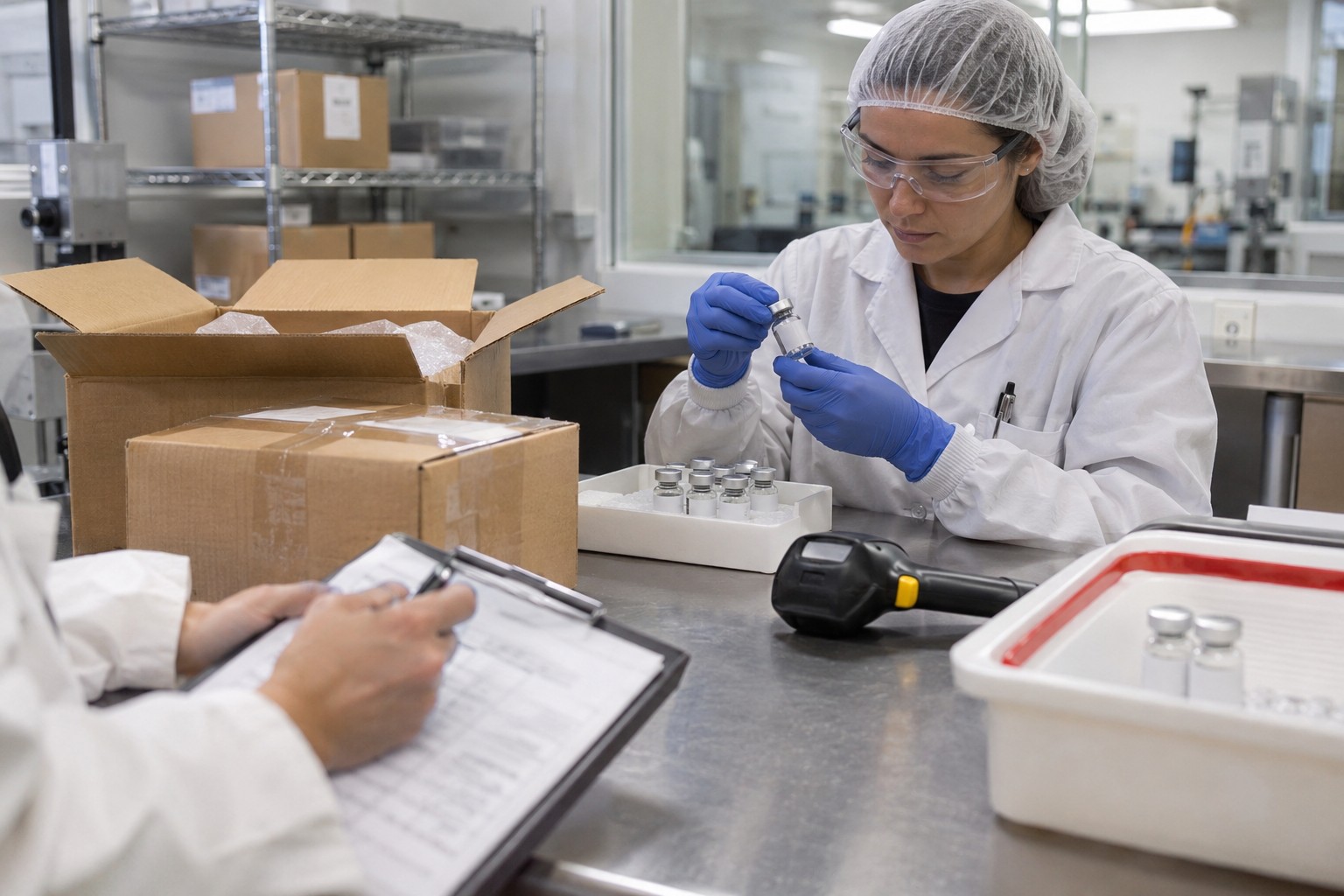
Quick answer: do not move a research shipment straight from the carrier to usable stock. Put it on hold, check the order, label, lot and COA, and record who released it. A short receiving record prevents a small mismatch from becoming a traceability problem.
1. Prepare the receiving checklist before arrival
Start with the approved order and expected documentation. Write down the product form, strength, pack count, destination, storage requirement and the COA fields that must be present. The same name used in the peptide product catalogue should appear on the purchase record, label photo and receiving sheet.
- One owner checks the delivery and one person can cover absences.
- The checklist names the expected lot or explains when it will be assigned.
- Storage and quarantine locations are identified before the carton arrives.
2. Quarantine first, then compare the evidence
Place the carton in a clearly marked hold area. Photograph the outer package, count units and compare the label with the packing record. Then match the product identity, lot number and issue or revision on the lot-specific peptide COA review. A generic specification is useful background, but it is not a substitute for evidence tied to the received lot.
- Record damage, seal condition and temperature concerns when relevant.
- Keep any missing or conflicting document visible in the order file.
- Do not relabel or redistribute material while a discrepancy is open.
For the next workflow, continue with Peptide Reorder Planning for B2B Teams: Forecasts, Safety Stock and Lot Reserva… and B2B Peptide Supplier Onboarding: Master Data, Compliance Files and Change Notices.
3. Make a release decision that can be audited
Use a simple status such as released, held or rejected, with the reviewer, date and reason. If the supplier sends a corrected document, keep the previous version and link the new revision to the same lot. For a question that cannot be resolved from the file, use the B2B quote request page and store the written reply with the decision.
- The decision points to the exact lot and approved document version.
- Photos and receiving notes remain with the order, not in a private mailbox.
- A repeat issue triggers a checklist update or supplier follow-up.
For routine delivery questions, see the B2B peptide purchasing FAQ; for a lot or document question, use the B2B quote request page. Related workflows are collected in the B2B peptide documentation guides.
B2B buyer questions
Question: What if the label and COA show different lot numbers?
Answer: Keep the shipment on hold, photograph both records and ask for a written correction or explanation before release.
Question: Can stock be released before the COA arrives?
Answer: Only under a documented internal exception that keeps the material segregated and sets an owner and deadline for the missing evidence.
Question: Which receiving photos are useful?
Answer: Capture the carton label, lot and expiry or retest field when present, seal or damage, and the units received. Avoid storing unrelated personal data.
Research-use note: The products discussed are for laboratory research and procurement evaluation only. This article is not medical, dosing or treatment advice.
Incoming receiving inspection sign-off checklist
Complete these five physical and documentary checks before moving any incoming carton out of quarantine:
- Outer seal & tamper check: Photograph intact shipping seals and note any crushing, wetness, or warm pack feel immediately upon delivery.
- Piece count vs. packing list: Count inner boxes and sample-check vial counts per tray before signing off total units received.
- Vial-to-COA lot match: Read the lot number directly off a physical vial (not only the shipping box) and verify exact character match with the COA PDF.
- Lyophilized cake integrity: Visually inspect sample vials for intact cake structure without melted or brown-tinted residue.
- Physical quarantine release: Apply a dated “Released” sticker or move stock into the active refrigerator/freezer bin only after sign-off.